Design history is the study of past designed objects in their original form, from books to posters. The lecture expressed that in times of struggle consumers often resort back to nostalgic design. Rebecca Gross (2018) explored the topic of nostalgia and creativity and found that memories of past events tend to give people in society a sense of meaning and belonging, which helps them to have a more open mind to forthcoming experiences. Which as a result encourages creativity in the design process.
Advantages of Design History
Designers need to know about the history of design so that they can understand principals in design. They can then implement this in their work to aid success. Researching design history can help designers understand why certain trends in history were so widely adopted. This will help to inspire them and help them to develop their work. As stated by Fry (2015, p. 16) there is a demand for designers to always better understand history “beyond the bounds of design practice and design theory”. This is so that they don’t repeat mistakes from history that have been already done.
Considering the work of Forty (2005) the study of design history is useful for designers to use as it gives them the chance to understand the relationship design has with society and ideology. As recorded by Forty (2005) in the 1970s the “association between cleanliness and Americanness gave the Lucky Strike packet an American image, which ensured it a national market”. From this statement, you can determine that the designer of the packaging Raymond Loewy worked with the association of the two factors and successfully incorporated that into his design through the colours he used. He knew what the consumer wanted and implemented that. In support of this Dilnot (2015, p. 136) stated: “the source of our unhappiness lies in how we stand, or fail to stand, to that history”.
In conclusion, it can be determined that when it comes to design, especially brand design it is important to know what the consumer wants. Design history is an effective research method to find this out as it can look at trends and past successes and failures throughout history.
Disadvantages of Design History
We know about history due to facts and figures recorded by individuals. History can also be studied through pictures taken from that time period. From just one picture you can acquire a sense of society and their attitude to design at the time. The reliability of information recorded can be taken into account as they can be biased because they were recorded from the account of one person. As they were not produced at the time for historical reference some information may have been exaggerated (https://www.reference.com/world-view/disadvantages-historical-research-b729f07cbc316c7f, no date).
In society now the history of design can be easily accessed through the internet and consumers sharing on social media. However, the question of is it accurate can be considered, like books written often are based on people opinion, which could be different from another person during the time period.
Directed Study
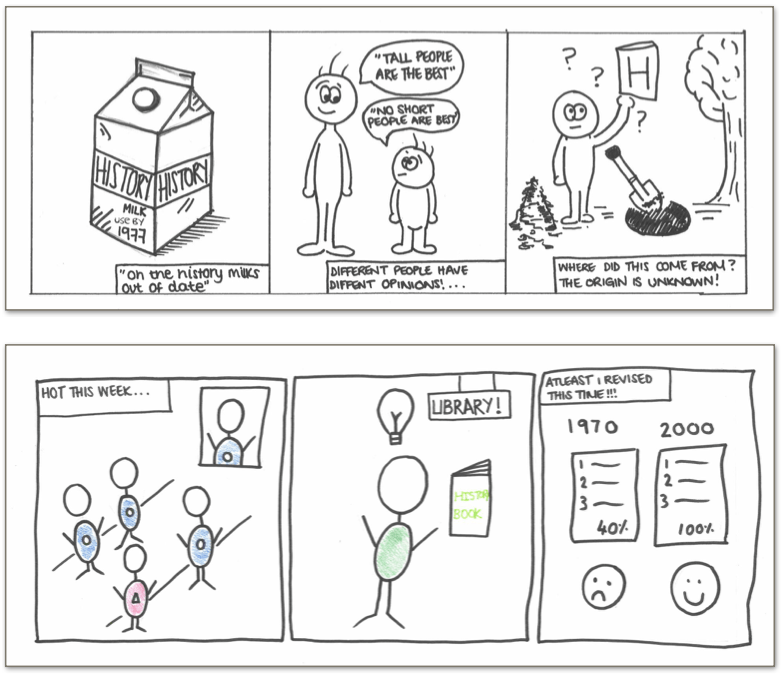
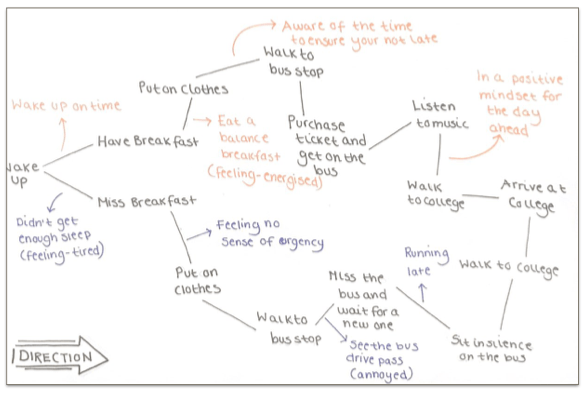
The directed study involved creating a storyboard showing the positives and negatives related to using design history. The information provided was simplified into character form to explain each fact. They added type in order to further explain the scenes. The outcome is shown below:
 Design Research Methods